
How to Start Reading the Bible When You Feel Like a Beginner
Part one of a two-part guide to getting comfortable with the Bible.
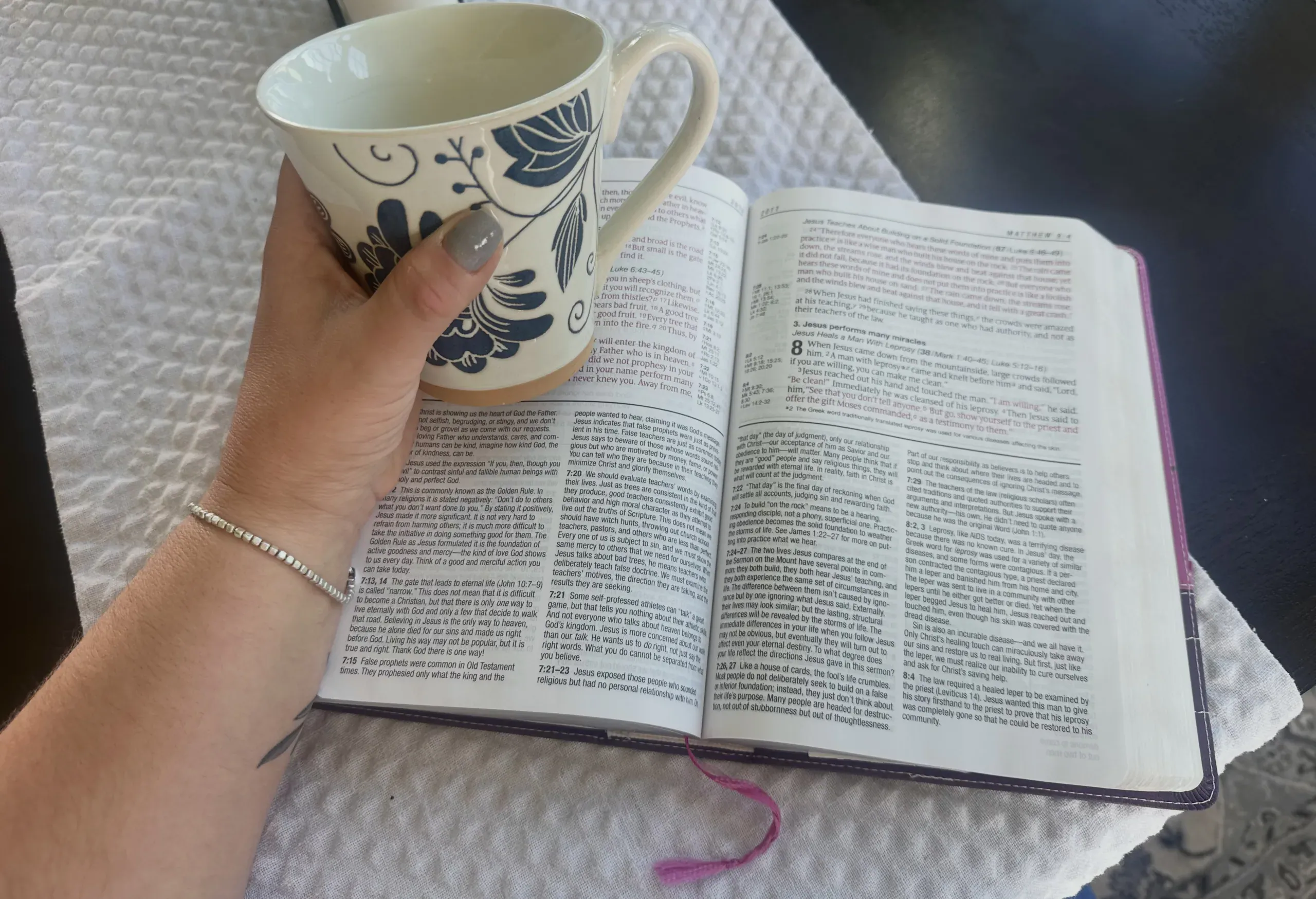
If you’re wondering how to start reading the Bible, begin with a short passage from one of the Gospels, the books that tell about Jesus. You can say a simple prayer, read slowly, and give yourself room to have questions.
You don’t need a strong faith background or a shelf full of study materials. But sometimes, feeling comfortable enough to begin is the hardest part.
“But I don’t know anything about the Bible.”
My husband and I have heard that response more than once when inviting someone to a Bible study or small group. Often, it comes with a little hesitation. What if everyone else knows more? What if someone asks a question I can’t answer? Will I belong?
If you’ve ever felt that way, you don’t need to know the Bible before you’re welcome to learn about it. Everyone was a beginner at some point. That includes us.
This post contains affiliate links. If you purchase through these links, I may earn a small commission at no additional cost to you. As an Amazon Associate I earn from qualifying purchases.
You didn’t have to grow up with faith to begin
I didn’t attend church with my parents as a child, though I sometimes went with my aunts and grandparents. My husband didn’t start attending church until after we had our daughter. Neither of us grew up with a strong faith background as part of our everyday family life.
When I first started reading the Bible, I used a simple study guide. Each day, it included a passage from the New Testament, a few verses from the Old Testament, some explanation, and a couple of questions to think about.
And I definitely didn’t understand everything.
Having a guide gave me a place to start. It didn’t mean I suddenly knew what every passage meant.
Maybe you’re exploring faith for the first time. Maybe you’re returning after some time away. Or perhaps you grew up in church, but reading the Bible on your own wasn’t something you learned to do.
Wherever you’re beginning, there’s room for you here.
Where should a beginner start reading the Bible?
A good place to begin is one of the Gospels: Matthew, Mark, Luke, or John. These books in the New Testament tell about Jesus’s life, teaching, death, and resurrection.
If you’d like one place to start, try Mark. It’s the shortest Gospel, and you can read it a small section at a time. You don’t have to start on the first page of the Bible or commit to reading the whole thing in a year.
Before you begin, you might pray:
God, I want to know you better. Help me understand what I’m reading. Help me keep learning, even when I have questions. Amen.
If you’re unsure what you believe, you can say that, too. You don’t need to pretend.
Then read a short passage. Pause and consider what you notice about Jesus or what questions come to mind. You don’t have to find a profound lesson every time you open your Bible.
Some days, you’ll finish with something to think about. Other days, you’ll finish with a question. Both give you somewhere to continue.
Choose a Bible you can understand
You don’t need to buy anything to get started. The free YouVersion Bible App lets you read or listen on your phone and switch between Bible versions.
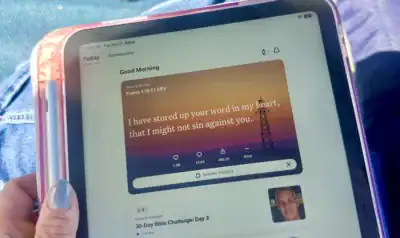
I typically use the New International Version (NIV), or the English Standard Version (ESV). If you’re unsure which to choose, try the NIV for now. You can explore other versions later.
YouVersion also has a Verse of the Day notification. During a busy season, that can be a small daily reminder to pause, read, and pray. When you have more time, you can open the surrounding passage to understand it better.
It’s okay to have help understanding the Bible
If you’d prefer some guidance, a simple beginner Bible study can help. Look for short Bible readings with a little explanation and a few reflection questions, similar to the guide I used. You don’t need to purchase anything before you begin.
I sometimes use studies from She Reads Truth and listen to their weekly podcast alongside them. Having some guidance can give you a place to bring your questions.
You can also learn alongside others. If joining a Bible study feels intimidating, ask the leader, “Would this be a good group for someone who’s new to the Bible?”
A welcoming group will make room for your questions. You can use the table of contents, ask what a word means, or say, “I don’t understand this.” Those are all part of learning.
How much of the Bible should you read each day?
Start with an amount you can read thoughtfully. That might be a short section, a chapter, or just a few verses.
My Bible reading looks different from season to season. Along with guided studies, I sometimes simply open my Bible and read a passage. I also listen through the Abide app and recently finished listening to the New Testament in 90 days. Other times, I study with a group of ladies.
These approaches have fit into my life at different times. You only need one place to begin.
And God sees your whole life.
If you’re mothering young children, caring for someone, or moving through an exhausting season, a long stretch of quiet may be hard to find. If you can read only a verse or two today, that’s okay.
You can think about those words while rocking a baby or offer a short prayer between the needs of the day. Your time doesn’t have to look like someone else’s to matter.
If you miss a day, return when you can. There’s no stack of missed assignments waiting for you.
A short Bible passage to try today
If you’d like somewhere specific to start, open to Mark 1:16–20. That means the book of Mark, chapter 1, verses 16 through 20.
Jesus Calls His First Disciples
16 As Jesus walked beside the Sea of Galilee, he saw Simon and his brother Andrew casting a net into the lake, for they were fishermen. 17 “Come, follow me,” Jesus said, “and I will send you out to fish for people.” 18 At once they left their nets and followed him.
19 When he had gone a little farther, he saw James son of Zebedee and his brother John in a boat, preparing their nets. 20 Without delay he called them, and they left their father Zebedee in the boat with the hired men and followed him.
Mark 1:16-20, NIV
Read those few verses slowly. Notice what Jesus says and how the people respond. Bring whatever you notice, or whatever you don’t understand, into a simple prayer. That can be enough for today.
You don’t need to know a lot to begin. You can come with curiosity, uncertainty, and a willingness to learn. Everyone starts somewhere.
If you’d like help finding words to pray, my free Prayer Starter Kit offers a gentle place to begin.
In the next article, we’ll explore how the Bible is organized, the differences between translations, and a few tools to help you understand what you’re reading.
Sincerely,
Kristi


